$10–13 per module
Additional manufacturer margin
Commercial scenario
Contact engineering for solar manufacturing
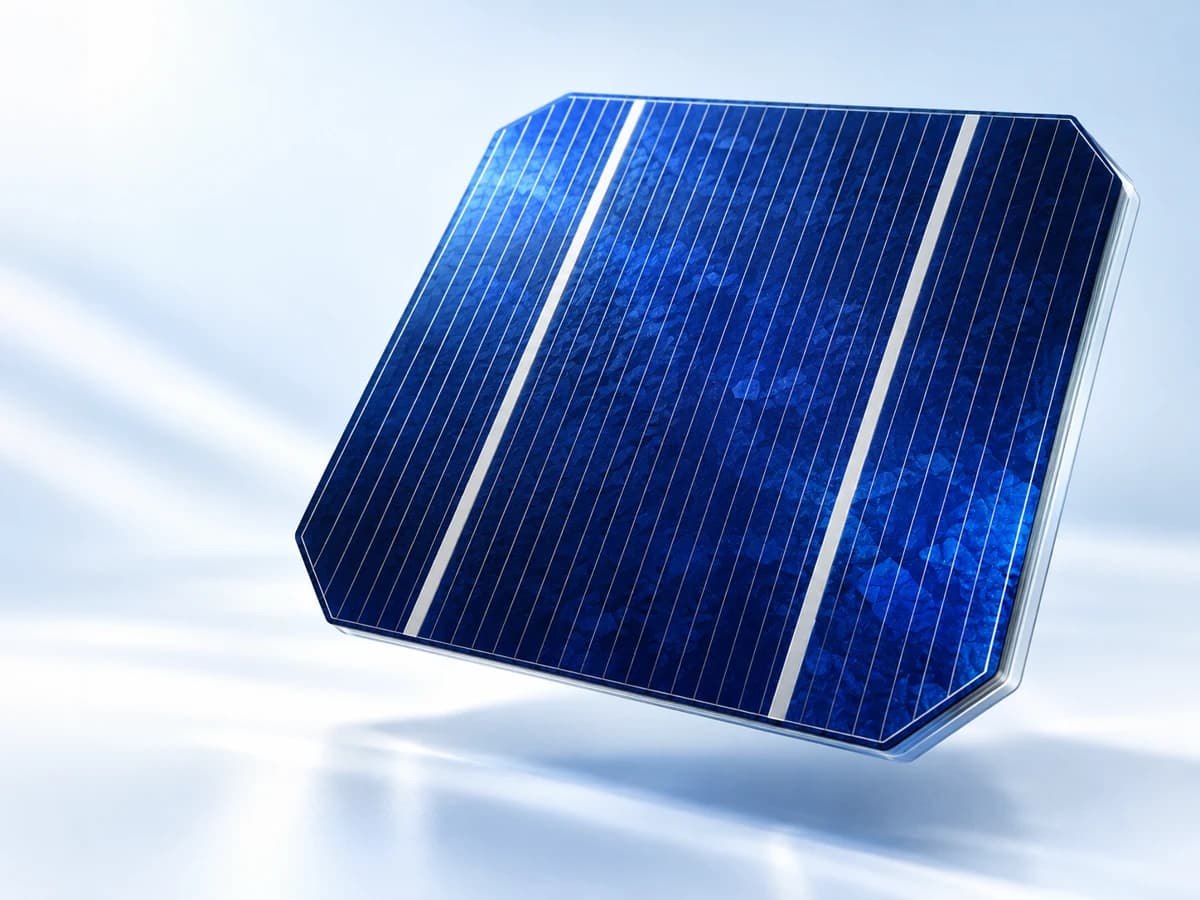
A novel p-type contact technology, with an initial retrofit focus on n-type TOPCon cells. We aim to capture the value through asset-light IP licensing.
Reported laboratory voltage gain
Commercial scenario
Commercial scenario
October 2026 Reference Model
Commercial scenario
One interface. Two value pools.
SiVolt targets a contact-level improvement where small changes in cell performance can create substantial value across the solar chain.
For manufacturers
An estimated $10–13 additional margin per module, with an intended retrofit path inside existing TOPCon production.
Commercial scenarioView manufacturer economicsFor developers & financiers
The +9.6% energy-yield scenario can improve revenue, equity returns and debt coverage when the additional energy can be delivered.
Commercial scenarioModel your project
Why start with TOPCon?
TOPCon means tunnel oxide passivated contact — an established silicon solar-cell architecture. Our initial integration programme focuses on improving its front contact while retaining the underlying manufacturing sequence.
This creates a route to scale through licensing into existing production capacity. TOPCon is our initial industrial focus; compatibility with other cell architectures will be assessed separately.
Explore the contact architectureThe SiVolt business model
Manufacturers invest in production assets. Developers own the generating projects. Our commercial model focuses on long-term licensing royalties for enabling the improvement.
Explore the licensing modelContact architecture and process know-how
Industrial validation, pilots and licensing
Revenue linked to licensed production
An asset-light IP platform serving the manufacturing capacity the industry already owns.
A clear path to bankability
The laboratory signal is the starting point. Commercial adoption depends on repeatable industrial performance, reliable modules and independently measured field data.
See the validation roadmapThe efficiency endpoint remains a target. The energy-yield scenario is a separate assumption requiring field validation.
The next conversation